
Complete Guide to Concrete Services: Driveways, Patios, Repairs, and Residential Concrete Solutions
Concrete is one of the most widely used construction materials in residential and commercial properties. Its strength, durability, and versatility make it a practical choice for everything from driveways and walkways to patios, outdoor spaces, foundations, and decorative surfaces.
However, successful concrete projects involve more than simply pouring material onto a prepared area. Proper planning, site preparation, material selection, finishing techniques, and maintenance all influence how a concrete surface performs over time.
Understanding different concrete services can help property owners make informed decisions when planning new installations, upgrading existing spaces, or addressing repairs.
This guide explores common concrete services, important project considerations, and the factors that contribute to long-lasting concrete surfaces.
What Are Concrete Services?
Concrete services include the installation, repair, replacement, and improvement of concrete surfaces and structures.
Professional concrete work can involve many different applications, including:
- Driveways
- Patios
- Walkways
- Concrete slabs
- Outdoor living areas
- Decorative surfaces
- Repairs and restoration
- Residential improvements
- Commercial concrete projects
Each project has unique requirements depending on the intended use, property conditions, design goals, and environmental factors.
Concrete Driveway Services
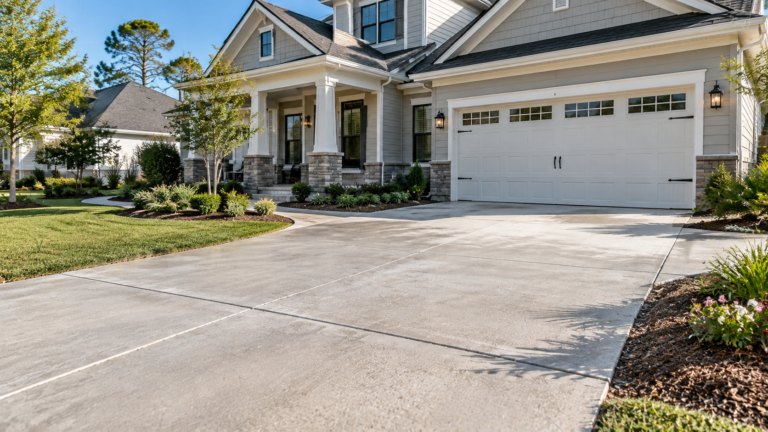
Concrete driveways are one of the most common residential concrete projects.
A properly designed driveway provides a durable surface for vehicles while improving the appearance and functionality of a property.
Benefits of Concrete Driveways
Concrete driveways are popular because they can offer:
Durability
Concrete can handle regular vehicle traffic when properly designed, installed, and maintained.
Design Flexibility
Property owners can choose from different finishes, colors, textures, and design approaches to complement their property.
Low Maintenance Requirements
Compared with some other paving materials, concrete surfaces generally require routine cleaning and occasional maintenance rather than frequent replacement.
Important Considerations Before Installing a Concrete Driveway
Several factors influence driveway performance.
Site Preparation
Proper preparation of the installation area is an important part of a successful concrete project.
Preparation may involve:
- Evaluating soil conditions
- Creating proper grading
- Preparing the base material
- Planning drainage
Poor preparation can contribute to surface problems over time.
Concrete Thickness and Reinforcement
The appropriate concrete design depends on how the driveway will be used.
Factors may include:
- Expected vehicle loads
- Ground conditions
- Climate considerations
- Local construction practices
A properly planned project considers both the surface appearance and structural requirements.
Concrete Patio and Outdoor Living Spaces
Concrete patios have become popular additions to residential properties because they provide functional outdoor areas for relaxation, entertainment, and everyday use.
Concrete patios can be designed in many ways, including:
- Simple finished surfaces
- Decorative patterns
- Textured finishes
- Custom layouts
Designing a Functional Concrete Patio
A successful patio project considers more than appearance.
Important factors include:
Purpose of the Space
Homeowners may use patios for:
- Outdoor dining
- Seating areas
- Entertainment spaces
- Garden features
- Recreational activities
The intended purpose influences the layout and design choices.
Drainage Planning
Proper water management is an important consideration for outdoor concrete surfaces.
A well-planned patio should account for:
- Surface slope
- Water movement
- Nearby landscaping
- Existing drainage conditions
Decorative Concrete Options
Concrete does not have to be limited to plain gray surfaces.
Decorative concrete techniques allow property owners to create unique appearances while maintaining the strength of concrete.
Common decorative approaches include:
Stamped Concrete
Stamped concrete uses patterns and textures to create the appearance of materials such as:
- Stone
- Brick
- Tile
- Wood textures
Colored Concrete
Color treatments can help create different visual styles and complement surrounding landscaping or architecture.
Textured Finishes
Surface textures can improve appearance while also creating different design effects.
Concrete Repair Services
Over time, concrete surfaces may develop issues caused by weather, usage, ground movement, or aging.
Common concrete concerns include:
- Cracks
- Surface wear
- Discoloration
- Uneven areas
- Damaged sections
The appropriate repair approach depends on the cause and severity of the problem.
Understanding Concrete Cracks
Not all cracks have the same meaning.
Some surface cracks may be related to normal concrete behavior, while larger or developing cracks may indicate underlying concerns.
Important factors include:
- Crack size
- Location
- Pattern
- Changes over time
- Surrounding conditions
A proper evaluation helps determine the appropriate response.
Concrete Maintenance Tips
Regular maintenance can help extend the appearance and performance of concrete surfaces.
General maintenance practices include:
Routine Cleaning
Removing dirt, debris, and stains can help maintain surface appearance.
Addressing Problems Early
Small issues may become larger concerns when ignored.
Regular inspection can help property owners identify changes before they become more significant.
Protecting the Surface
Depending on the application, protective treatments may help reduce wear and improve long-term appearance.
Factors That Influence Concrete Quality
Several elements contribute to a successful concrete project.
Material Quality
The materials used in a project influence strength, appearance, and durability.
Installation Process
Proper installation techniques affect:
- Surface finish
- Structural performance
- Long-term reliability
Environmental Conditions
Weather, moisture, temperature changes, and soil conditions can influence concrete performance.
Residential vs Commercial Concrete Projects
While many concrete principles apply across different projects, residential and commercial applications may have different requirements.
Residential projects often focus on:
- Appearance
- Outdoor functionality
- Home improvement goals
- Personal preferences
Commercial projects may prioritize:
- Higher traffic requirements
- Accessibility considerations
- Business operations
- Long-term durability
Choosing a Concrete Contractor
When planning a concrete project, property owners should consider several factors.
Experience
A contractor should understand different concrete applications and project requirements.
Communication
Clear discussions about design, materials, timelines, and expectations help create better project outcomes.
Project Planning
A quality concrete project begins with proper evaluation and preparation.
Common Concrete Misconceptions
Myth: Concrete Never Requires Maintenance
While concrete is durable, regular care can help maintain its appearance and performance.
Myth: All Concrete Projects Are the Same
Different applications require different approaches depending on usage, location, and design goals.
Myth: Appearance Is the Only Consideration
A successful concrete project balances both aesthetics and structural performance.
Final Thoughts
Concrete services cover a wide range of applications, from practical driveways and patios to decorative surfaces and repair solutions.
Understanding the basics of concrete installation, maintenance, and design options helps property owners approach projects with better knowledge and clearer expectations.
Whether planning a new outdoor space or improving an existing concrete surface, careful planning and professional expertise are important parts of creating durable and functional results.
Disclaimer
This article is provided for general educational purposes only. It does not replace professional contractor evaluation, site assessment, project estimates, or construction advice specific to an individual property.
About the Author
Leslie Nichols
Leslie Nichols writes educational content focused on concrete services, construction concepts, property improvements, and outdoor concrete solutions. Her work helps readers better understand concrete terminology, project considerations, and important factors involved in planning residential and commercial concrete projects.