Concrete Driveways Explained: Planning, Installation, Maintenance, and Design Options
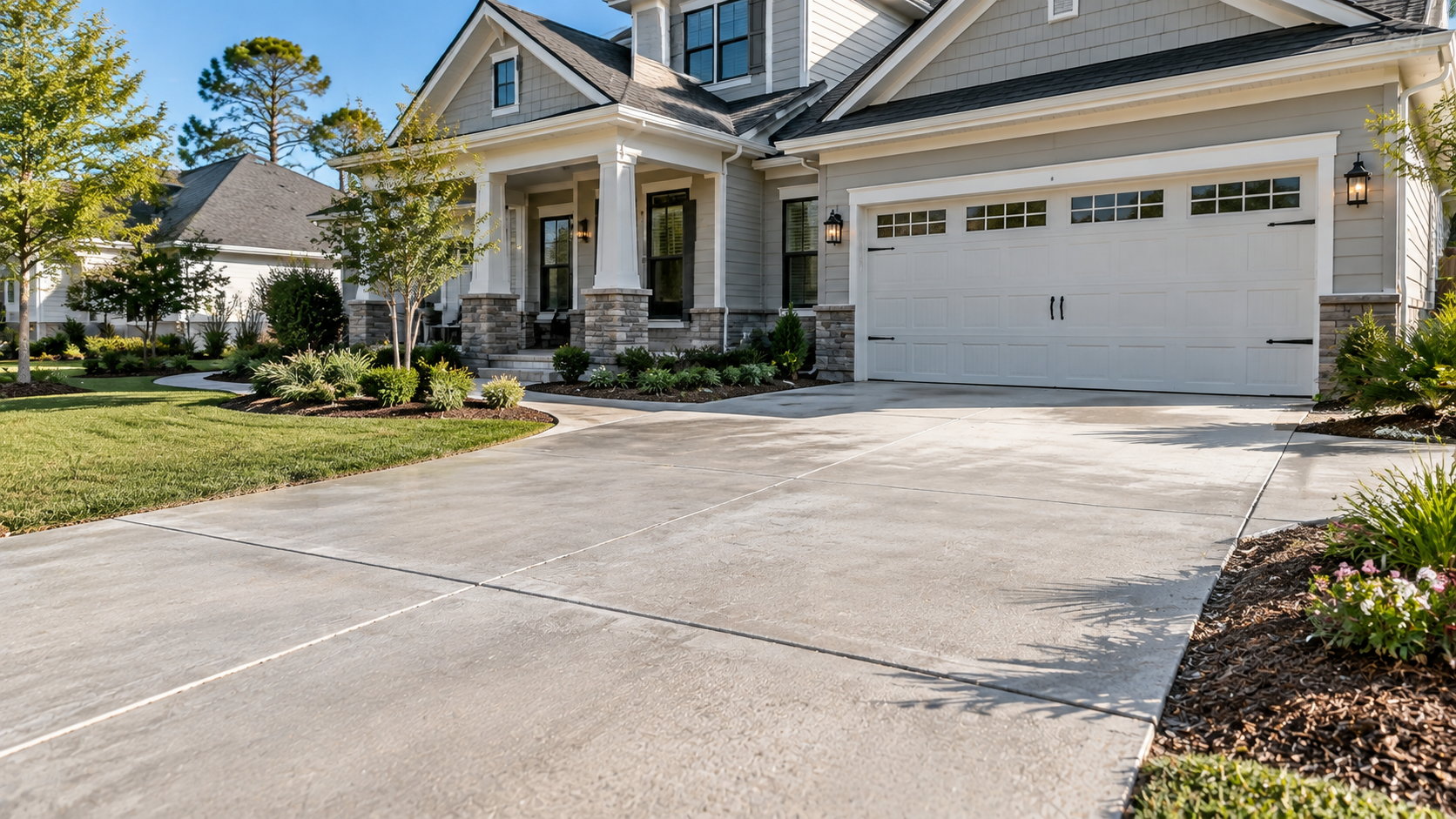
A driveway is one of the most frequently used areas of a residential property. It provides daily access for vehicles, creates an important first impression, and contributes to the overall functionality and appearance of a home.
Among the available driveway materials, concrete remains a popular choice because of its durability, versatility, and ability to adapt to different property styles.
However, a successful concrete driveway requires careful planning. Factors such as site preparation, drainage, concrete quality, finishing methods, and ongoing maintenance all influence how the surface performs over time.
Understanding the basics of concrete driveways can help homeowners make informed decisions when considering a new installation, replacement, or improvement project.
What Is a Concrete Driveway?
A concrete driveway is a paved surface made from a mixture of cement, water, aggregates, and other materials designed to create a strong and durable area for vehicle access.
Unlike temporary surfaces, a properly designed concrete driveway is intended to provide long-term performance while supporting regular vehicle use.
Concrete driveways are commonly used for:
- Residential homes
- Garages
- Entry pathways
- Parking areas
- Outdoor property improvements
The final appearance and performance depend on factors such as materials, installation methods, environmental conditions, and maintenance.
Benefits of Concrete Driveways
Durability and Strength
One of the main reasons homeowners choose concrete driveways is their ability to handle regular use.
A properly constructed driveway can provide a stable surface for:
- Passenger vehicles
- Family cars
- Light trucks
- Everyday residential traffic
The strength of the driveway depends on proper design, preparation, and installation.
Design Flexibility
Concrete does not have to look plain or unfinished.
Modern concrete options allow homeowners to customize appearance through:
- Decorative patterns
- Textures
- Colors
- Borders
- Finishing techniques
This flexibility allows driveways to complement different architectural styles.
Long-Term Value
A well-planned concrete driveway can improve property functionality and curb appeal.
While initial project costs may vary, many homeowners consider concrete a long-term investment because of its durability and design possibilities.
Planning a Concrete Driveway Project
Before installation begins, several important factors should be considered.
Evaluating the Site
The property conditions play an important role in driveway performance.
Important considerations include:
- Existing ground conditions
- Property slope
- Drainage patterns
- Available space
- Connection to existing structures
Proper evaluation helps create a driveway design that works with the property rather than against it.
Drainage Considerations
Water management is an important part of concrete driveway planning.
Poor drainage can contribute to problems such as:
- Surface deterioration
- Soil erosion
- Cracking concerns
- Water accumulation
A properly planned driveway should consider how water moves across and around the property.
Driveway Size and Layout
The size and layout of a driveway depend on the property and intended use.
Factors may include:
- Number of vehicles
- Garage location
- Turning space
- Walkway connections
- Landscaping features
A well-designed layout improves both convenience and appearance.
Concrete Driveway Installation Process
While every project is different, concrete driveway installation generally involves several important stages.
Site Preparation
Preparation creates the foundation for the driveway.
This may include:
- Removing existing materials
- Preparing the ground
- Creating proper grading
- Establishing a stable base
A properly prepared base helps support the concrete surface.
Forming the Driveway Area
Forms are used to define the shape and boundaries of the driveway.
This step helps ensure:
- Proper dimensions
- Clean edges
- Consistent layout
Pouring and Finishing Concrete
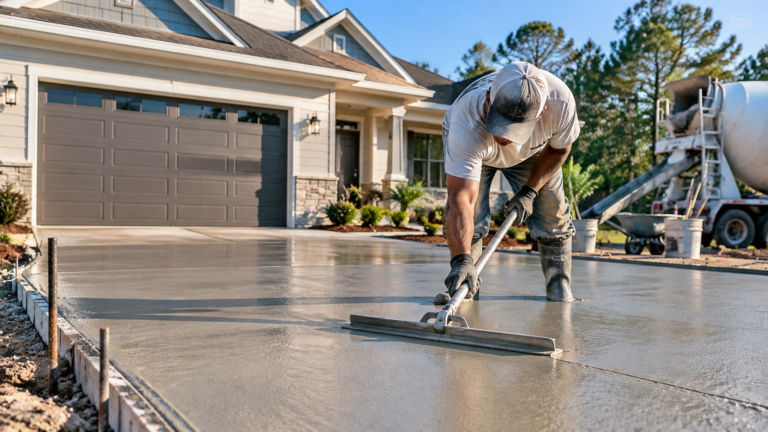
Once the area is prepared, concrete is placed and leveled.
Finishing techniques help create the desired surface appearance and texture.
Common finishing options include:
- Smooth finishes
- Brushed textures
- Decorative patterns
- Custom designs
Curing Process
Concrete requires time to properly cure and develop strength.
The curing process helps the material achieve better durability and performance.
Proper care during this stage is an important part of protecting the new driveway.
Decorative Concrete Driveway Options
Concrete driveways can be customized in several ways.
Stamped Concrete
Stamped concrete uses patterns and textures to create the appearance of other materials.
Common visual styles include:
- Stone patterns
- Brick designs
- Tile-inspired textures
Colored Concrete
Color can be added to create different visual effects.
Options may range from subtle tones that complement a home to stronger decorative finishes.
Borders and Accent Designs
Some homeowners add borders or accent sections to create a more customized appearance.
These details can help define driveway edges and improve visual appeal.
Maintaining a Concrete Driveway
Regular maintenance can help preserve the appearance and performance of a concrete driveway.
Keep the Surface Clean
Removing dirt, leaves, and debris helps maintain the appearance of the surface.
Monitor Cracks and Changes
Small changes should be observed over time.
Pay attention to:
- New cracks
- Surface changes
- Uneven areas
- Drainage problems
Early attention may help prevent larger issues.
Protect the Surface
Depending on conditions and usage, protective treatments may help maintain the driveway’s appearance and durability.
Common Concrete Driveway Problems
Cracking
Cracks can develop due to different factors, including:
- Ground movement
- Weather conditions
- Installation issues
- Normal concrete behavior
The appropriate response depends on the size, location, and cause of the crack.
Surface Wear
Over time, concrete surfaces may experience changes caused by:
- Vehicle traffic
- Weather exposure
- Improper maintenance
Regular care can help reduce unnecessary wear.
Drainage Issues
Water-related problems can affect driveway performance.
Proper planning and maintenance are important for managing moisture around concrete surfaces.
Replacing an Existing Driveway
Some older driveways may eventually require replacement rather than repair.
Replacement considerations may include:
- Extensive damage
- Structural problems
- Major deterioration
- Changing property needs
A professional evaluation can help determine whether repair or replacement is the better option.
Choosing a Concrete Contractor
Selecting the right contractor is an important part of a successful driveway project.
Homeowners should consider:
Experience
Look for knowledge of residential concrete applications and driveway projects.
Communication
A good contractor should clearly explain project details, materials, and expectations.
Planning
Quality results begin with proper preparation and understanding of the property.
Final Thoughts
Concrete driveways provide homeowners with a durable and customizable option for improving property access and appearance.
From initial planning and installation to maintenance and design choices, every stage affects the long-term performance of the surface.
Understanding concrete driveway fundamentals helps homeowners approach projects with better expectations and make informed decisions when working with construction professionals.
Disclaimer
This article is provided for general educational purposes only. It does not replace professional contractor evaluation, site assessment, estimates, or construction advice specific to an individual property.